The palm charcoal production line is a new symbol of the circular use of resources. During palm oil extraction, people always consider the palm shell as agricultural waste. The palm shell charcoal production line changes this opinion. The production line uses carbonization as its working principle to bring out the potential of the palm shell. With the main functions of the machines, the palm kernel shell can be converted into biomass charcoal. As an agricultural waste, the palm kernel shell is a perfect material for charcoal-making. For this, there are various charcoal making machines for your choice.

Can palm shell be used as material to make charcoal?

Of course. Using palm shell as material is an ideal choice for both disposing of agricultural waste and preparing quality charcoal. In general, making biochar with palm shell has 3 advantages as follows:

How to make palm shell charcoal?

When you plan to make palm shell charcoal, you must learn the major processes of palm shell charcoal production. Generally, if you use palm shell as materials to make biochar, it needs 3 steps:
Crushing palm shell into small pieces

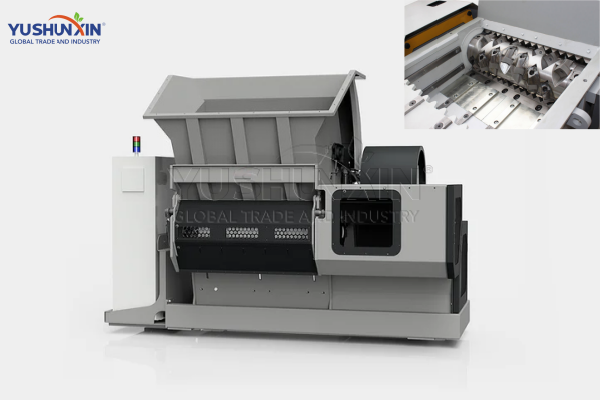
In order to make quality palm shell biochar, it is advisable to crush your waste palm shell into small pieces. This is beneficial for charcoal production. On the one hand, the smaller volume of the crushed palm shells allows for more even heating during carbonization. On the other hand, the carbonization temperature of the crushed material is easier to control, resulting in lower energy consumption and reduced emissions of smoke and tar. Here, for waste palm shell, a single shaft shredder or a double shafts shredder is enough.

palm shell single shaft shredderpalm shell double shafts shredder

Drying crushed palm shell evenly

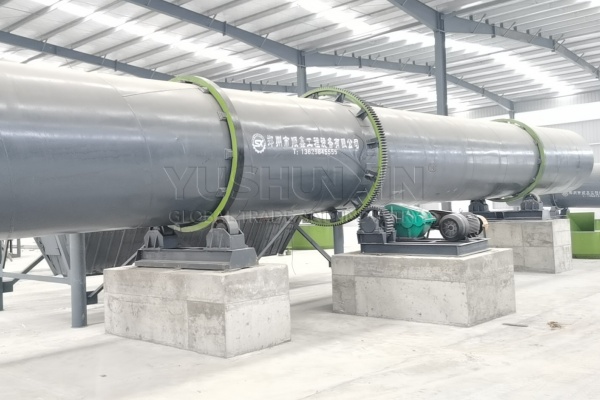
Palm shells typically have a moisture content of 30–50%. If they are carbonized directly without drying, the evaporation of moisture consumes a large amount of heat, resulting in a slow rise in carbonization temperature, fuel waste, and a decrease in gas production and char yield. After drying, the moisture content is reduced to ≤15%, which significantly improves thermal efficiency. Furthermore, it makes the carbonized palm shells harder and produces a higher calorific value. So, a rotary dryer is more suitable.

palm shell rotary dryer

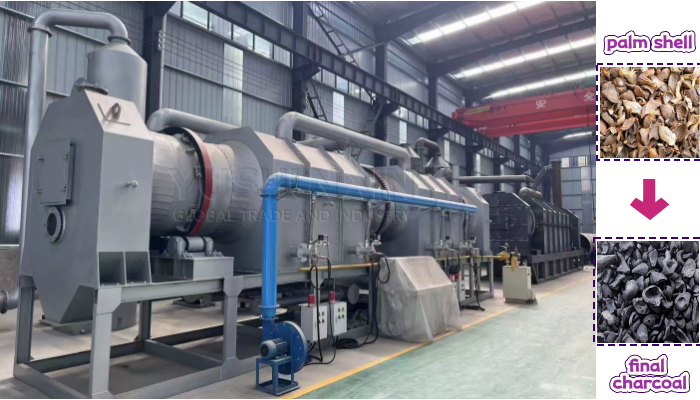
Turning waste palm shell pieces into charcoal

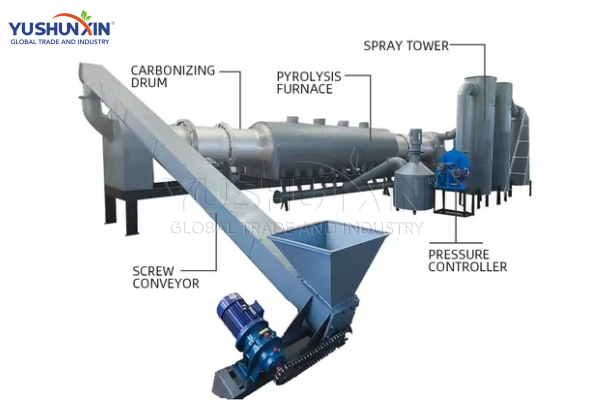
If you prepare to make charcoal, we recommend you with continuous carbonization machine according to your material size. This continuous carbonization technology, in addition to what has been mentioned above, also includes a water-cooled charcoal extraction system, a charcoal deep processing system, a combustible gas and heating system, a combustion exhaust system, a tail gas recycling system, a tail gas treatment system, a condensation system, and an electrical control system. We will adjust the plan appropriately according to your country’s policies to ensure compliance with local environmental standards.

continuous carbonization machine for palm shell charcoal making

How to control the final carbonization temperature in palm shell charcoal line?

Palm shell charcoal production requires precise temperature control to ensure high-quality charcoal. The carbonization temperature directly affects the fixed carbon content, density, and combustion characteristics of the final product. By understanding the temperature stages and controlling the furnace conditions, operators can achieve consistent results suitable for different applications, from BBQ charcoal to activated carbon raw materials.
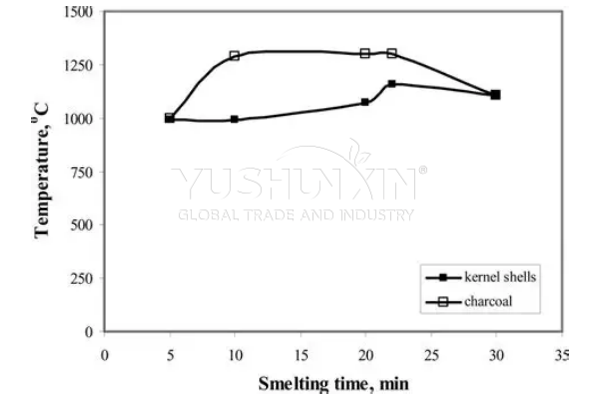
Carbonization of palm shells occurs in three main stages, each influencing the charcoal’s quality. The drying stage, typically between 150 and 200°C, removes moisture from the raw material, preparing it for further processing. During the pyrolysis stage, from around 280 to 400°C, organic compounds decompose, releasing combustible gases and creating initial carbon structures. The final carbonization stage, usually between 450 and 650°C, solidifies the charcoal, determining its fixed carbon content, density, and energy value. Properly managing each stage ensures the charcoal meets quality standards and performance requirements.

Modern palm shell charcoal lines often use advanced PLC systems with thermocouples to monitor and regulate furnace temperature automatically. Adjusting the feed rate allows operators to fine-tune the internal heat, while combustible gas recirculation helps maintain stable heating conditions. Furnace insulation is also critical, as it minimizes heat loss and prevents temperature fluctuations. By combining these methods, the carbonization process can be precisely controlled, producing uniform charcoal that meets specific application requirements, whether for industrial fuel, BBQ use, or activated carbon production.

What is the palm shell charcoal making machine price?

Generally, the price of the system of making palm shell biochar is not fixed. Because it depends on your capacity, equipment types, project design, etc. The palm charcoal production line costs range from $30,000 to $600,000.
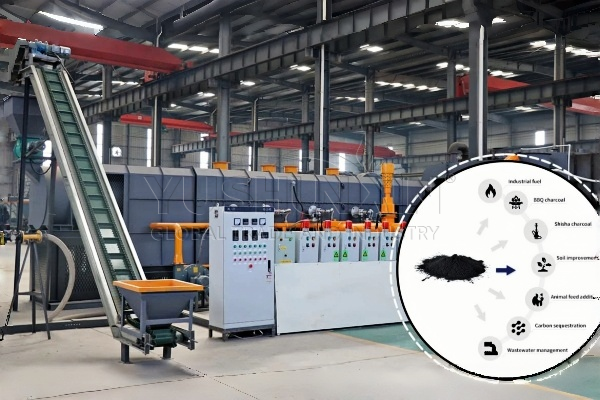
  • For $30,000-$80,000 budget, you can choose to complete pretreatment (crusher + conveyor), rotary dryer, stable continuous carbonization furnace, water cooling system and condenser, tar recovery system, basic gas combustion & dust removal system, PLC + HMI control, char deep processing (crushing, screening, packaging).

  • With $80,000-$250,000, we can offer you an upgrading design of fully automatic feeding and drying system, continuous carbonization furnace, advanced water-cooling discharge system, complete tar recovery & condensing system, tail gas purification, gas recycling and waste heat recovery (for drying/heating), PLC + SCADA automatic control, safety & explosion-proof. With an output of 1 t/h.

palm shell charcoal making line

Besides palm shell charcoal making, YUSHUNXIN also can offer you many other charcoal production lines. Such as hookah production line, coconut shell making line, sawdust charcoal making machine line, etc. Welcome to contact us for your customized biochar manufacturing solutions immediately!