
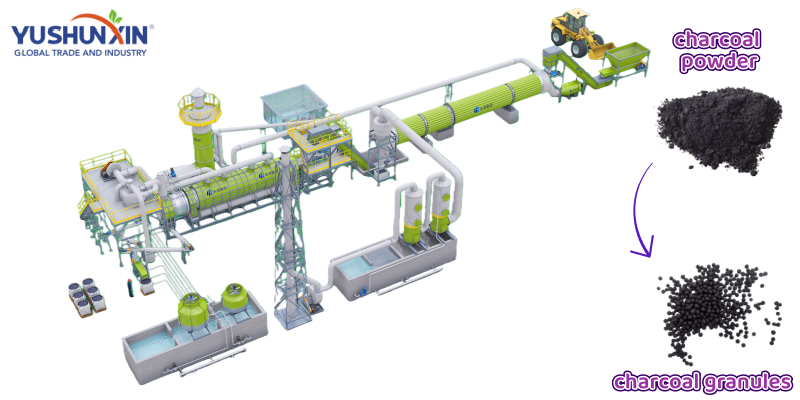
Для удовлетворения быстрорастущего спроса на биоуголь премиум-класса на рынке ЕС., производители должны построить систему, обеспечивающую стабильное качество, прочные гранулы, и производительность углерода, готовая к CDR. Поэтому, выбор правильной технологии пиролиза, блоки постобработки, и оборудование для грануляции становится необходимым. С хорошо продуманной линией, вы можете достичь высокого уровня связанного углерода, низкая зольность, и однородную структуру, а также создавая гранулированные продукты с добавленной стоимостью и удобрения на основе биоугля.. Этот комплексный подход поддерживает сельское хозяйство, органическое сельское хозяйство, и долгосрочные возможности удаления углерода.
Каковы основные решения для производства биоугля??
Производство высококачественного биоугля для сельского хозяйства ЕС и программ CDR требует комплексной системы, включающей надежную линию пиролиза., эффективный процесс грануляции, и передовые составы удобрений на основе биоугля. Каждый шаг играет решающую роль в определении качества конечного продукта., рыночная стоимость, и готовность к сертификации.
Линия пиролиза для биоугля – стабильная структура и низкая зольность
Если ваша цель — производство биоугля премиум-класса с высоким содержанием фиксированного углерода, низкая зольность, и однородное качество частиц, усовершенствованная система непрерывного пиролиза – лучшее решение. При непрерывном пиролизе, биомасса нагревается при точно контролируемых температурах и времени пребывания, обеспечение равномерной карбонизации. В результате получается биоуголь со стабильной структурой., уменьшенное количество примесей, и высокая производительность для улучшения почвы. Полная линия включает в себя кормление, пиролизный реактор, охлаждение, разрядка, и очистка выбросов. Такие системы идеально подходят для сельскохозяйственных рынков ЕС., органическое сельское хозяйство, садоводство, и продукцию, соответствующую требованиям CDR, поскольку они обеспечивают стабильную, сертифицированное качество.
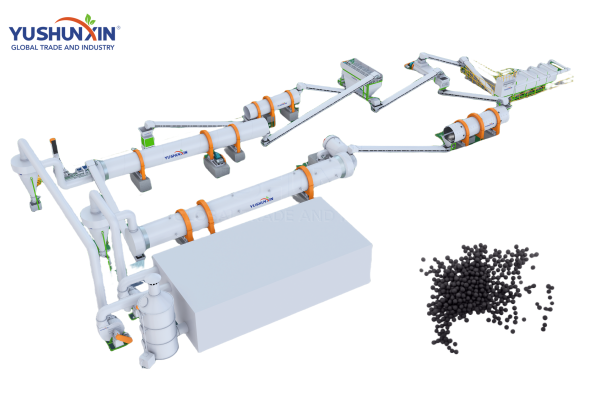
Линия грануляции Biochar – сильная & Равномерные пеллеты
Если вы хотите превратить сыпучий порошок биоугля в более ценную продукцию, важен процесс грануляции. При грануляции биоуголь превращается в круглые гранулы превосходной прочности., единообразие, и простота применения в сельскохозяйственном оборудовании. Под действием вращательной или экструзионной силы, обработанный биоугольный материал образует плотные и прочные гранулы с улучшенной сыпучестью и стабильностью при хранении.. Этот тип гранул премиум-класса предпочтителен для тепличного сельского хозяйства., виноградники, ягодные культуры, и ценные улучшители почвы. На этапе грануляции, дисковые грануляторы или грануляторы с вращающимся барабаном являются распространенными вариантами в зависимости от влажности., формулировка, и требования к мощности.
Biochar-Based Fertilizer Formulations – Higher Value and CDR Integration
If you focus on maximizing product performance and market value, creating biochar-based fertilizer blends is an excellent choice. These formulations combine biochar with compost, minerals (Ca, Mg, Si), or organic additives to enhance nutrient retention, microbial activity, and soil structure. The blended material is processed through mixing and optional granulation to create premium fertilizers tailored for berries, виноградники, vegetables, and greenhouse crops. Because biochar acts as a long-term carbon sink, these products can also qualify for CDR certification under standards such as EBC-CDR and Puro.Earth. This integrated approach offers dual revenue streams: fertilizer sales and carbon credit generation from 1 ton of biochar equaling 2.0–2.4 tons of CO₂ removed.
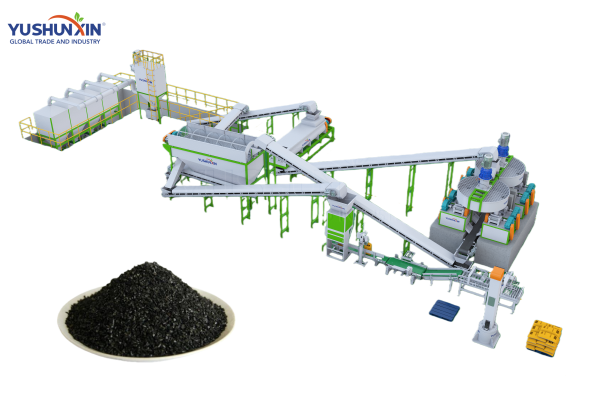
What Pyrolysis Line is Suitable for High Quality Biochar Production?
Producing biochar requires a pyrolysis system that delivers consistent carbonization, stable output, and reliable quality for EU agriculture and CDR programs. Поэтому, choosing a continuous pyrolysis line with precise temperature control and efficient post-processing becomes crucial. This combination ensures high fixed carbon, низкая зольность, and uniform particle structure, which are essential for certification and downstream granulation. A well-designed system also supports long-term operational stability and maximizes carbon retention.
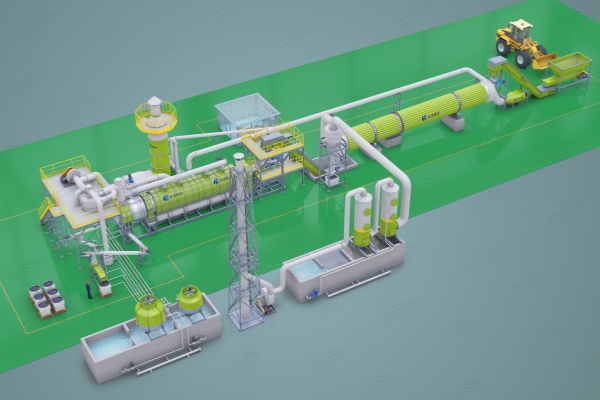
What Types of Charcoal Making Business Plan you Can Start?
Starting a charcoal-making business gives you diverse options because different biomass materials can be carbonized into high-value charcoal products. Below are four profitable charcoal production lines you can consider.
How Do Different Granulation Systems Create Strong and Uniform Biochar Pellets?
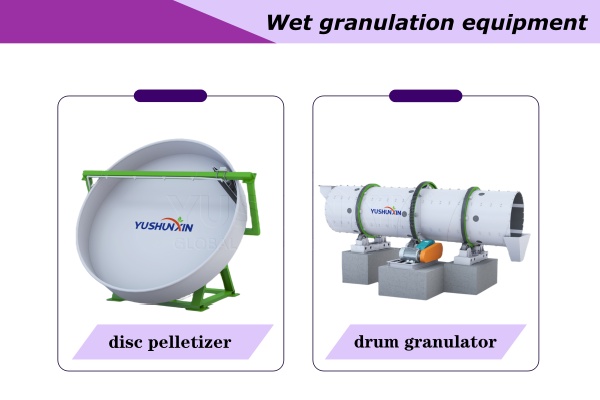
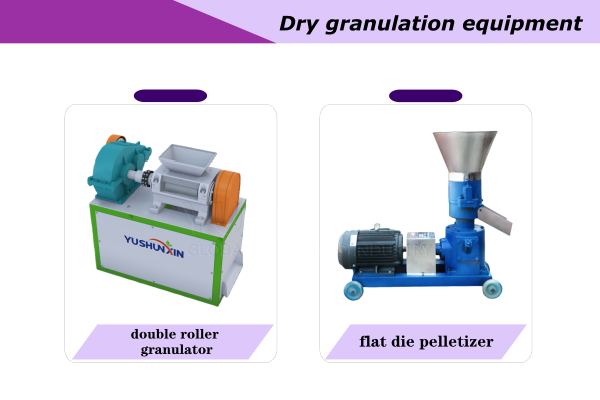
Producing biochar pellets requires choosing the right granulation system based on material moisture, production scale, and target applications. Wet granulation and dry granulation each offer unique advantages, and understanding their differences helps you build a stable, high-output production line. When matched with proper moisture control, Смешивание, and screening, both systems can create durable, uniform pellets suitable for EU agriculture, soil improvement, and downstream fertilizer blending.
How to Make Biochar-Based Fertilizer?
Biochar-based fertilizers offer a high-value opportunity for producers who want to serve EU organic farming, greenhouse cultivation, and specialty crop markets. By combining biochar with nutrients, compost, or organic additives, manufacturers can create powerful soil improvers that enhance nutrient retention, boost microbial activity, and support long-term carbon sequestration. With a well-designed production process, these blends achieve stable quality, strong granule strength, and consistent nutrient delivery for berries, виноградники, vegetables, and high-performance greenhouse crops.
Types of Biochar-Based Fertilizers
Producers can develop several high-value biochar fertilizer formulations depending on crop needs and soil conditions. Биоуголь + compost blends improve microbial activity and organic matter levels, making them ideal for horticulture and vegetable production. Биоуголь + minerals (Ca, Mg, Si) strengthens soil structure and enhances plant resistance to stress, commonly used in vineyards and berry crops. Biochar with organic additives allows customized nutrient profiles for greenhouse agriculture and specialty crops. Each blend leverages biochar’s high porosity to enhance nutrient retention and long-term soil conditioning.
Biochar-Based Fertilizer Production Process
When you plan to produce carbon-based fertilizer, it is essential to understand the core processes involved in biochar fertilizer manufacturing. В целом, when you use biochar and compost as raw materials, the production process includes three major steps:
Crushing Biochar and Compost into Fine Powder
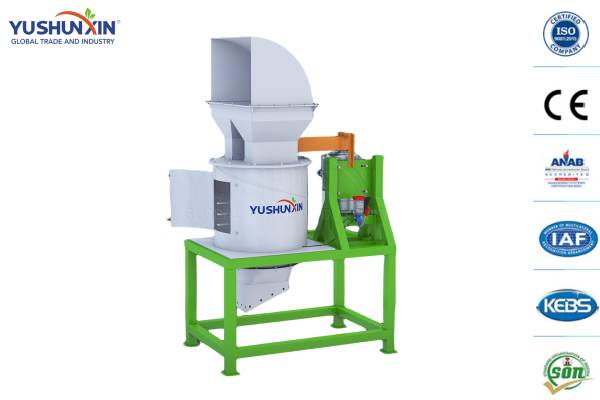
To produce high-quality biochar fertilizer, you must first crush charcoal blocks, biochar chips, and compost clumps into fine powder. Finer particle size improves the nutrient absorption of powdery fertilizers and enhances pellet formation for granular products. A vertical fertilizer crusher is suitable for handling both biochar and compost, ensuring uniform particle size and preparing materials for efficient mixing and granulation.
Mixing Biochar and Compost Evenly for Nutrient Balance
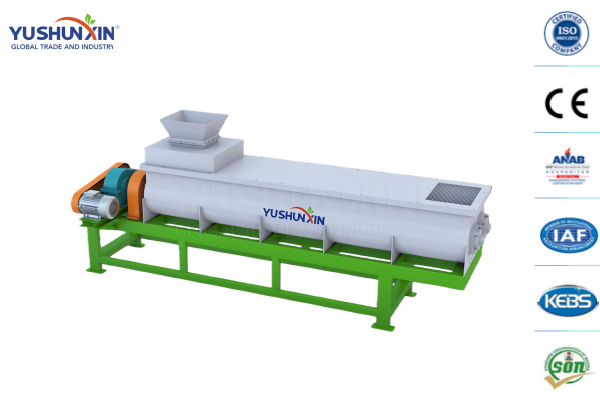
Next, to achieve consistent nutrient distribution in the final fertilizer, the mixed materials must be blended thoroughly. A fertilizer mixer ensures even combination of biochar powder with compost. Depending on your capacity and efficiency needs, you can choose from several mixers, including large-scale horizontal mixers, high-speed double-shaft blenders, or low-cost disc mixers. These systems ensure uniformity and stability for both small-scale and industrial productions.
Turning the Biochar–Compost Blend into Organic Fertilizer Granules
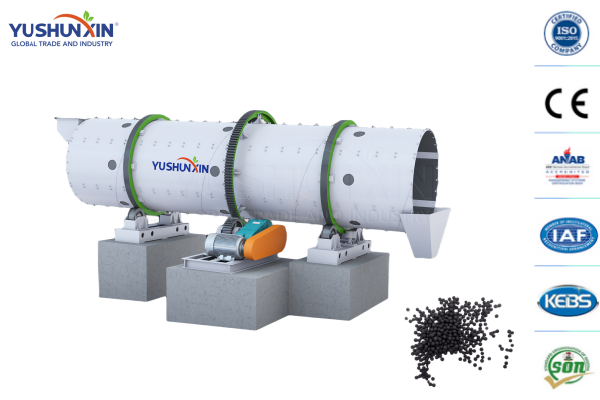
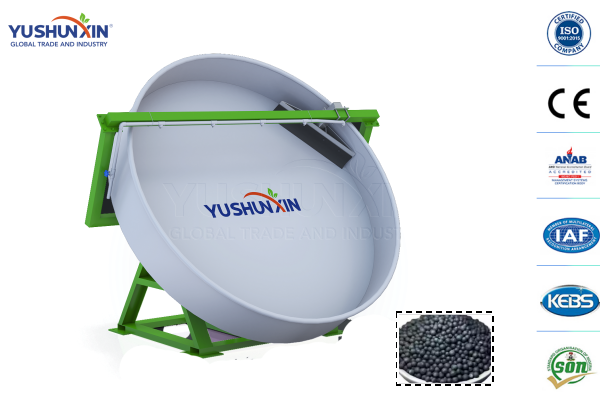
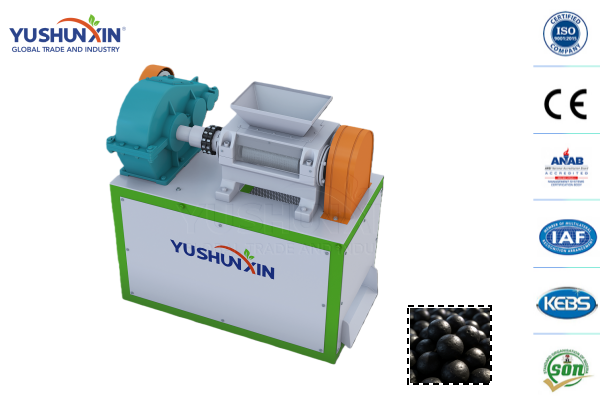
If you want to improve storage stability, transport efficiency, and controlled-release performance, granulating the biochar–compost mixture is a highly effective step. You can choose a pan pelletizer for small-scale biochar fertilizer production, a rotary drum granulator for large-scale carbon-based fertilizer manufacturing, or a double roller granulator for low-cost dry granulation without adding water. Each machine helps you produce strong, uniform organic fertilizer granules with higher commercial value.
Биоуголь + CDR: A Dual-Revenue Model for High ROI Projects
High-quality biochar stores carbon in a stable form for hundreds of years, and therefore becomes one of the most reliable carbon-removal solutions for agriculture and climate markets. Because each ton of biochar permanently removes 2.0–2.4 tons of CO₂, scaling production allows investors to generate both climate impact and stable commercial value. This long-term carbon stability also makes biochar eligible for the most recognized CDR certification systems worldwide.
When your biochar meets EBC-CDR, Puro.Earth, or ICROA-aligned methodologies, it qualifies for high-value carbon credit issuance. These certification systems verify carbon permanence, production process quality, and sustainable sourcing. Как результат, certified producers can access premium markets where carbon credits trade at €200–€400 per ton of CO₂, which significantly increases project profitability and ensures predictable returns.
By combining a continuous pyrolysis line with controlled post-processing and granulation, producers maximize carbon retention and achieve consistent, certifiable product quality. This integration enables dual revenue streams: biochar sales for agriculture and carbon credit sales for CDR programs. Because every certified ton of biochar can generate €400–€960 in carbon credit income alone, investors benefit from accelerated ROI and long-term financial stability.
CDR Revenue Estimation for Biochar Production
| Емкость | Biochar Output (t/day) | CO₂ Removal (t/day) | Carbon Credit Price (€/ tCO₂) | Daily CDR Revenue (€) | Annual CDR Revenue (300 дни) |
| 500 кг/ч | 12 t/day | 24–28.8 t/day | €200–€400 | €4,800–€11,520 | €1.44M–€3.45M / год |
| 1000 кг/ч | 24 t/day | 48–57.6 t/day | €200–€400 | €9,600–€23,040 | €2.88M–€6.91M / год |
Notes:
- Calculation based on: 1 ton biochar = 2.0–2.4 tons CO₂ removed
- Revenue only includes carbon credits; biochar sales are additional income
- Annual revenue calculated for 300 operating days
If you have any other want to know about biochar production solution for CDR integration, welcome to contact us now. Более того, есть также bamboo charcoal making plan, wood pellet machine, rice husk pellet making solution, etc here for your choice.