
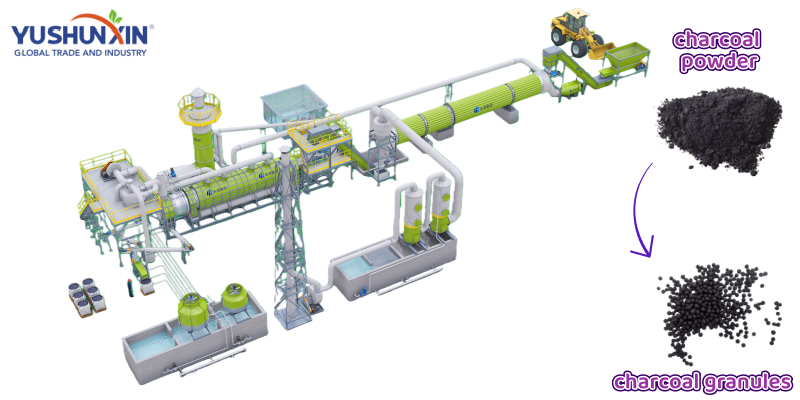
To meet the fast-growing demand for premium biochar in the EU market, producers must build a system that delivers stable quality, strong granules, and CDR-ready carbon performance. Busa, selecting the right pyrolysis technology, post-processing units, and granulation equipment becomes essential. With a well-designed line, you can achieve high fixed carbon, low ash, ug uniporme nga estraktura samtang nagmugna usab og value-added granulated nga mga produkto ug biochar-based fertilizers. Kining hiniusa nga pamaagi nagsuporta sa agrikultura, organikong pagpanguma, ug dugay nga mga oportunidad sa pagtangtang sa carbon.
What Are the Core Solutions for Biochar Production?
Ang paghimo og taas nga kalidad nga biochar alang sa agrikultura sa EU ug mga programa sa CDR nanginahanglan usa ka kompleto nga sistema nga adunay usa ka kasaligan nga linya sa pyrolysis, usa ka epektibo nga proseso sa granulation, ug advanced biochar-based fertilizer formulations. Ang matag lakang adunay hinungdanon nga papel sa pagtino sa katapusan nga kalidad sa produkto, bili sa merkado, ug pagkaandam sa sertipikasyon.
Pyrolysis Line for Biochar – Stable Structure and Low Ash
Kung ang imong tumong mao ang paghimo sa premium-grade biochar nga adunay taas nga fixed carbon, ubos nga abo nga sulod, ug homogenous nga kalidad sa partikulo, usa ka abante nga padayon nga sistema sa pyrolysis mao ang labing kaayo nga solusyon. Atol sa padayon nga pyrolysis, Ang biomass gipainit ubos sa tukma nga kontrolado nga temperatura ug mga oras sa pinuy-anan, pagsiguro sa managsama nga carbonization. Nagresulta kini sa biochar nga adunay lig-on nga istruktura, pagkunhod sa mga hugaw, ug lig-on nga performance alang sa pag-ayo sa yuta. Ang usa ka kompleto nga linya naglakip sa pagpakaon, pyrolysis reactor, pagpabugnaw, pagdiskarga, ug pagtambal sa emisyon. Ang ingon nga mga sistema maayo alang sa mga merkado sa agrikultura sa EU, organikong pagpanguma, hortikultura, ug CDR-kwalipikado nga produksiyon tungod kay naghatud sila nga makanunayon, sertipikado nga kalidad.
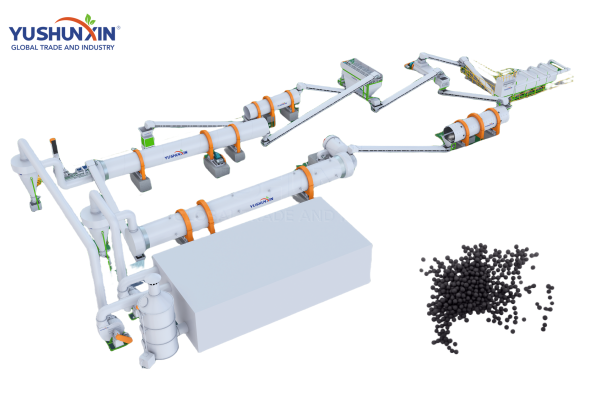
Biochar Granulation Line – Strong & Uniform Pellets
Kung gusto nimo nga i-convert ang loose biochar powder ngadto sa mas taas nga kantidad nga mga produkto, Ang proseso sa granulation hinungdanon. Ang granulasyon nagporma sa biochar ngadto sa mga round pellets nga adunay maayo kaayong kusog, pagkaparehas, ug sayon nga aplikasyon sa mga kagamitan sa agrikultura. Ubos sa rotational o extrusion nga puwersa, ang giproseso nga biochar nga materyal nagporma nga dasok ug lig-on nga mga granule nga adunay gipaayo nga pagkadagayday ug kalig-on sa pagtipig. Kini nga matang sa premium pellet gipalabi alang sa greenhouse nga agrikultura, mga ubasan, mga tanom nga berry, ug high-value soil improvers. Alang sa lakang sa granulation, Ang mga disc pelletizer o rotary drum granulators kasagarang mga kapilian depende sa kaumog, pagporma, ug mga kinahanglanon sa kapasidad.
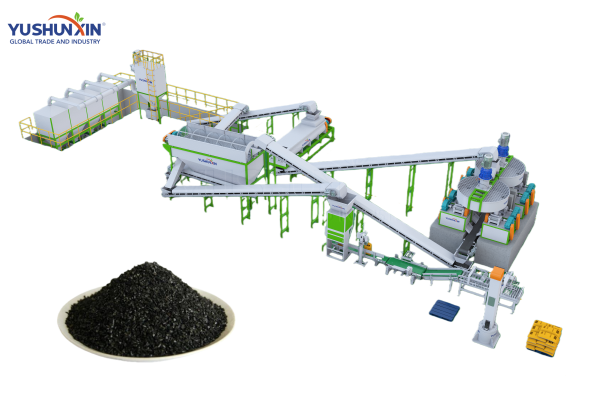
Biochar-Based Fertilizer Formulations – Higher Value and CDR Integration
Kung nag-focus ka sa pag-maximize sa performance sa produkto ug bili sa merkado, ang paghimo sa biochar-based fertilizer blends usa ka maayong pagpili. Kini nga mga pormulasyon naghiusa sa biochar ug compost, minerales (Ca, Si Mg, Ug), o mga organikong additives aron mapalambo ang pagpabilin sa sustansya, microbial nga kalihokan, ug istruktura sa yuta. Ang gisagol nga materyal giproseso pinaagi sa pagsagol ug opsyonal nga granulation aron makahimo og mga premium nga abono nga gipahaum alang sa mga berry, mga ubasan, mga utanon, ug greenhouse crops. Tungod kay ang biochar naglihok isip usa ka dugay nga carbon sink, these products can also qualify for CDR certification under standards such as EBC-CDR and Puro.Earth. This integrated approach offers dual revenue streams: fertilizer sales and carbon credit generation from 1 ton of biochar equaling 2.0–2.4 tons of CO₂ removed.
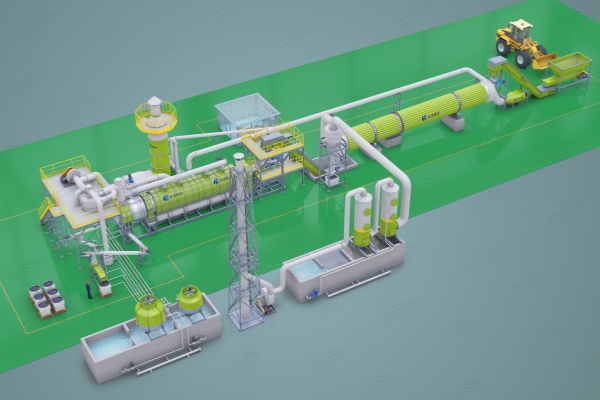
What Pyrolysis Line is Suitable for High Quality Biochar Production?
Producing biochar requires a pyrolysis system that delivers consistent carbonization, stable output, and reliable quality for EU agriculture and CDR programs. Busa, choosing a continuous pyrolysis line with precise temperature control and efficient post-processing becomes crucial. This combination ensures high fixed carbon, ubos nga abo nga sulod, and uniform particle structure, which are essential for certification and downstream granulation. A well-designed system also supports long-term operational stability and maximizes carbon retention.
What Types of Charcoal Making Business Plan you Can Start?
Starting a charcoal-making business gives you diverse options because different biomass materials can be carbonized into high-value charcoal products. Below are four profitable charcoal production lines you can consider.
How Do Different Granulation Systems Create Strong and Uniform Biochar Pellets?
Producing biochar pellets requires choosing the right granulation system based on material moisture, production scale, and target applications. Wet granulation and dry granulation each offer unique advantages, and understanding their differences helps you build a stable, high-output production line. When matched with proper moisture control, mixing, and screening, both systems can create durable, uniform pellets suitable for EU agriculture, soil improvement, and downstream fertilizer blending.
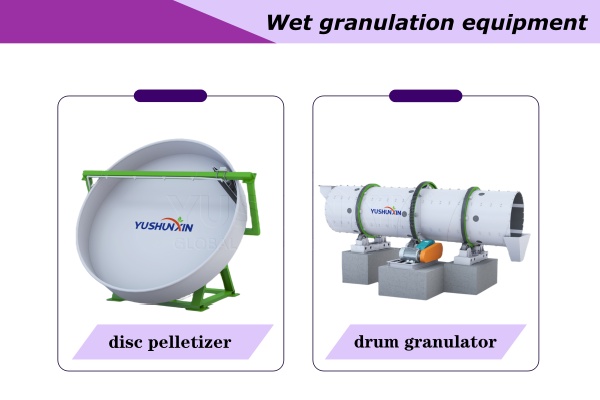
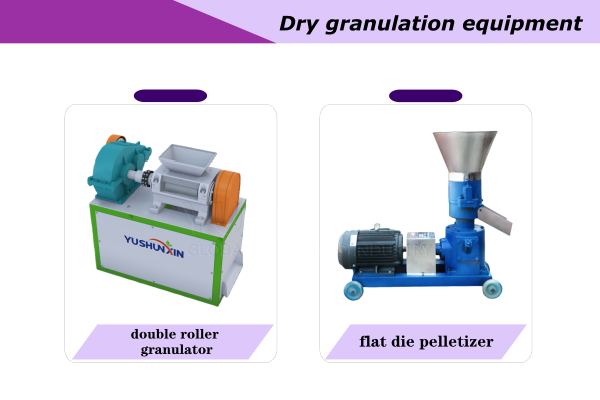
How to Make Biochar-Based Fertilizer?
Biochar-based fertilizers offer a high-value opportunity for producers who want to serve EU organic farming, greenhouse cultivation, and specialty crop markets. By combining biochar with nutrients, compost, or organic additives, manufacturers can create powerful soil improvers that enhance nutrient retention, boost microbial activity, and support long-term carbon sequestration. With a well-designed production process, these blends achieve stable quality, strong granule strength, and consistent nutrient delivery for berries, mga ubasan, mga utanon, and high-performance greenhouse crops.
Types of Biochar-Based Fertilizers
Producers can develop several high-value biochar fertilizer formulations depending on crop needs and soil conditions. Biochar + compost blends improve microbial activity and organic matter levels, making them ideal for horticulture and vegetable production. Biochar + minerales (Ca, Si Mg, Ug) strengthens soil structure and enhances plant resistance to stress, commonly used in vineyards and berry crops. Biochar with organic additives allows customized nutrient profiles for greenhouse agriculture and specialty crops. Each blend leverages biochar’s high porosity to enhance nutrient retention and long-term soil conditioning.
Biochar-Based Fertilizer Production Process
When you plan to produce carbon-based fertilizer, it is essential to understand the core processes involved in biochar fertilizer manufacturing. Generally, when you use biochar and compost as raw materials, the production process includes three major steps:
Crushing Biochar and Compost into Fine Powder
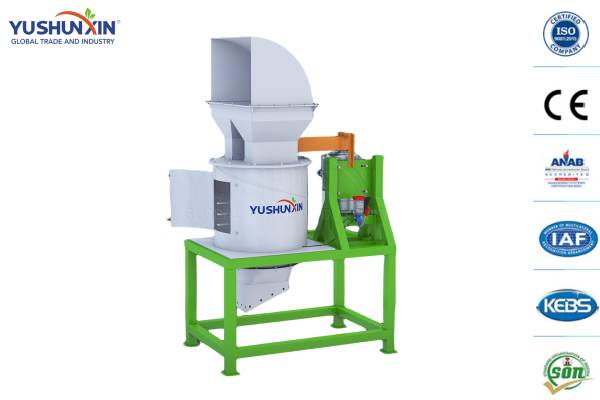
To produce high-quality biochar fertilizer, you must first crush charcoal blocks, biochar chips, and compost clumps into fine powder. Finer particle size improves the nutrient absorption of powdery fertilizers and enhances pellet formation for granular products. A vertical fertilizer crusher is suitable for handling both biochar and compost, ensuring uniform particle size and preparing materials for efficient mixing and granulation.
Mixing Biochar and Compost Evenly for Nutrient Balance
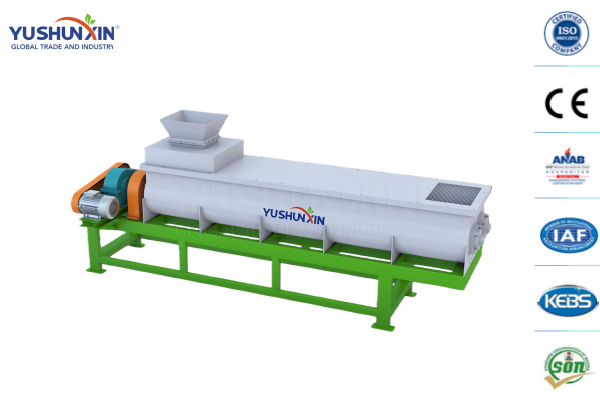
Sunod, to achieve consistent nutrient distribution in the final fertilizer, the mixed materials must be blended thoroughly. A fertilizer mixer ensures even combination of biochar powder with compost. Depending on your capacity and efficiency needs, you can choose from several mixers, including large-scale horizontal mixers, high-speed double-shaft blenders, or low-cost disc mixers. These systems ensure uniformity and stability for both small-scale and industrial productions.
Turning the Biochar–Compost Blend into Organic Fertilizer Granules
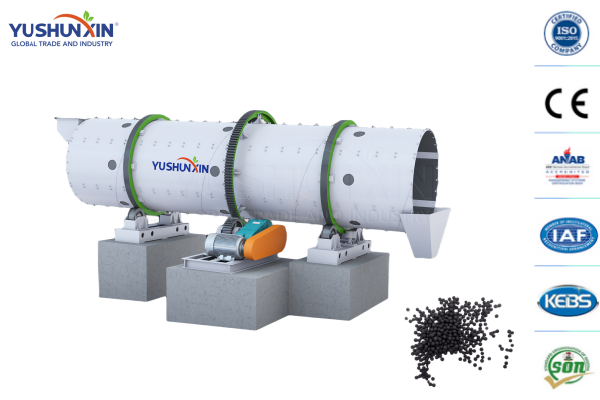
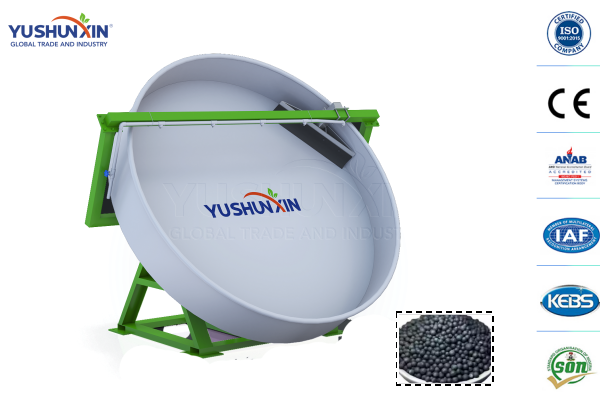
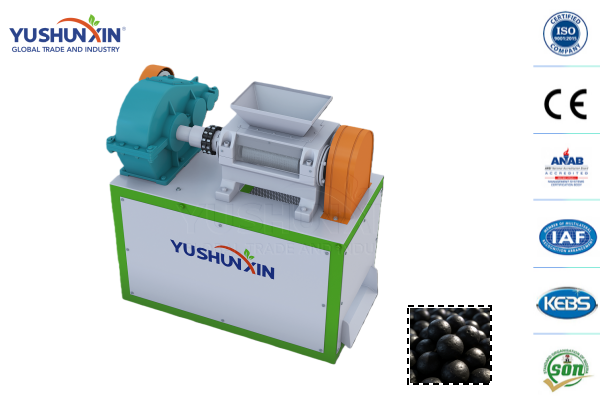
If you want to improve storage stability, transport efficiency, and controlled-release performance, granulating the biochar–compost mixture is a highly effective step. You can choose a pan pelletizer for small-scale biochar fertilizer production, a rotary drum granulator for large-scale carbon-based fertilizer manufacturing, or a double roller granulator for low-cost dry granulation without adding water. Each machine helps you produce strong, uniform organic fertilizer granules with higher commercial value.
Biochar + CDR: A Dual-Revenue Model for High ROI Projects
High-quality biochar stores carbon in a stable form for hundreds of years, and therefore becomes one of the most reliable carbon-removal solutions for agriculture and climate markets. Because each ton of biochar permanently removes 2.0–2.4 tons of CO₂, scaling production allows investors to generate both climate impact and stable commercial value. This long-term carbon stability also makes biochar eligible for the most recognized CDR certification systems worldwide.
When your biochar meets EBC-CDR, Puro.Earth, or ICROA-aligned methodologies, it qualifies for high-value carbon credit issuance. These certification systems verify carbon permanence, production process quality, and sustainable sourcing. Ingong resulta, certified producers can access premium markets where carbon credits trade at €200–€400 per ton of CO₂, which significantly increases project profitability and ensures predictable returns.
By combining a continuous pyrolysis line with controlled post-processing and granulation, producers maximize carbon retention and achieve consistent, certifiable product quality. This integration enables dual revenue streams: biochar sales for agriculture and carbon credit sales for CDR programs. Because every certified ton of biochar can generate €400–€960 in carbon credit income alone, investors benefit from accelerated ROI and long-term financial stability.
CDR Revenue Estimation for Biochar Production
| Kapasidad | Biochar Output (t/day) | CO₂ Removal (t/day) | Carbon Credit Price (€/ tCO₂) | Daily CDR Revenue (€) | Annual CDR Revenue (300 days) |
| 500 k | 12 t/day | 24–28.8 t/day | €200–€400 | €4,800–€11,520 | €1.44M–€3.45M / tuig |
| 1000 k | 24 t/day | 48–57.6 t/day | €200–€400 | €9,600–€23,040 | €2.88M–€6.91M / tuig |
Notes:
- Calculation based on: 1 ton biochar = 2.0–2.4 tons CO₂ removed
- Revenue only includes carbon credits; biochar sales are additional income
- Annual revenue calculated for 300 operating days
If you have any other want to know about biochar production solution for CDR integration, welcome to contact us now. Moreover, Adunay usab bamboo charcoal making plan, wood pellet machine, rice husk pellet making solution, etc here for your choice.


